Thank you Tom,
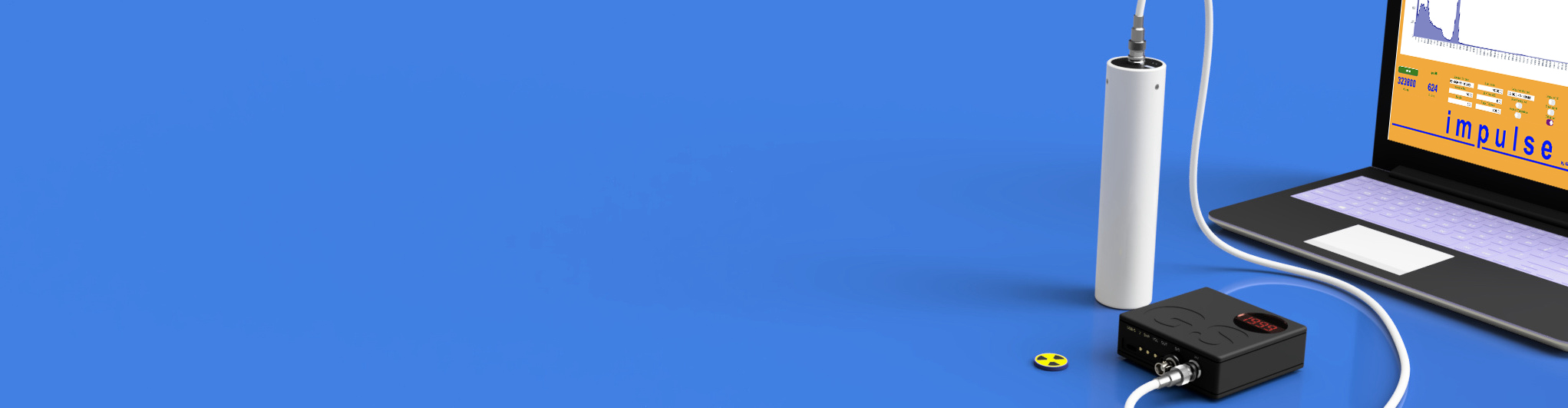
The GS-USB-PRO paired with one of your Scionix Holland Gamma Scintillation Detector NaI(Tl) would perfectly match my budget. I'll get in touch with you once I've made my mind.
Mirion PDS 100G, Spectrometric Personal Radiation Detector

Re: Mirion PDS 100G, Spectrometric Personal Radiation Detector
Sure thing Alain. Please send me a message at iradinc at att dot net when you are ready to do something, or if you have any further questions. And PLEASE be safe. Cheers, Tom
Cheers, Tom Hall / IRAD INC / Stuart, FL USA
Please check out my eBay Store: http://stores.ebay.com/The-Rad-Lab
Please check out my eBay Store: http://stores.ebay.com/The-Rad-Lab
-
gravelmonkey
- Posts: 11
- Joined: 17 Feb 2020, 21:51
- Location: SW England, UK
- Contact:
Re: Mirion PDS 100G, Spectrometric Personal Radiation Detector
Hi All,
Finally got things up and running, I've actually had the PDS100G since 2017, it must have been one of the first of the surplus sold on ebay?
Below is a short (138 second) acquisition spectra of Am-241 - the only source I currently have to hand.

The peak is recorded as 55.8keV.
Am I correct this should be 59.6keV? Though I'm aware Am-241 is only a low-energy source, and the general quality of that acquisition is poor, I'm worried that the calibration is way out. Here is spectra of an unknown isotope-

Linear scale on the Y axis.
I don't know whether my inability to identify the isotopes recorded is due to incorrect calibration or my lack of experience!
The PDS calculated dose rate was c.1μSv/hr. This spectra was recorded un-shielded next to a person who'd just had some kind of nuclear medicine to identify a tumor. I thought it would be Tc-99m but the peaks do not match!?
Finally got things up and running, I've actually had the PDS100G since 2017, it must have been one of the first of the surplus sold on ebay?
Below is a short (138 second) acquisition spectra of Am-241 - the only source I currently have to hand.
The peak is recorded as 55.8keV.
Am I correct this should be 59.6keV? Though I'm aware Am-241 is only a low-energy source, and the general quality of that acquisition is poor, I'm worried that the calibration is way out. Here is spectra of an unknown isotope-
Linear scale on the Y axis.
I don't know whether my inability to identify the isotopes recorded is due to incorrect calibration or my lack of experience!
The PDS calculated dose rate was c.1μSv/hr. This spectra was recorded un-shielded next to a person who'd just had some kind of nuclear medicine to identify a tumor. I thought it would be Tc-99m but the peaks do not match!?
Will

Re: Mirion PDS 100G, Spectrometric Personal Radiation Detector
You are correct that it should be 59.6 KeV, but don't expect this detector to be that precise. And even if it is, at the range where the Am241 peak is, it very likely won't show you 1460.8 KeV for K40. The scintillation detectors are not linear through the whole range. If you want to check the callibration of this PDS unit, don't look to just the extrema you took. To get more peaks, and some of them in the higher range, take a Th232-containing gas lantern mantle for example, since it is easy to find and buy.
This below doesn't look like Tc99.
Greetings,
Svilen
This below doesn't look like Tc99.
Greetings,
Svilen
Svilen
Re: Mirion PDS 100G, Spectrometric Personal Radiation Detector
gravelmonkey wrote: ↑08 Apr 2020, 21:40Hi All,
Finally got things up and running, I've actually had the PDS100G since 2017, it must have been one of the first of the surplus sold on ebay?
Below is a short (138 second) acquisition spectra of Am-241 - the only source I currently have to hand.
The peak is recorded as 55.8keV.
Am I correct this should be 59.6keV? Though I'm aware Am-241 is only a low-energy source, and the general quality of that acquisition is poor, I'm worried that the calibration is way out. Here is spectra of an unknown isotope-
Linear scale on the Y axis.
I don't know whether my inability to identify the isotopes recorded is due to incorrect calibration or my lack of experience!
The PDS calculated dose rate was c.1μSv/hr. This spectra was recorded un-shielded next to a person who'd just had some kind of nuclear medicine to identify a tumor. I thought it would be Tc-99m but the peaks do not match!?
Hello there,
To my the last spectrum looks like Th232, with calibration off by roughly 8-9%. (a factor 1.085 more or less).
This is the spectrum a classic thorium mantle
As said above calibration looks a bit off, underestimating the energy of the peaks, you can adjust that using gain and offset.
My first spectrum was off by a factor 1.3 across the board so I just increased the gain parameter by the same factor. Essentially "gain" is a proportionality factor between energy and channels, while offset moves the whole spectrum right or left, adding or subtracting a constant.
Do you know the equation of a straight line? y = mx + b. It's just like that.
y is the energy in keV.
x is the channel.
m is the gain.
b is the offset.
For most people the "normal" gain value seems to be close to 2 (some are a bit below, some a bit above), I currently use 2.09, my first setting was 2.04. Some people I know have slighly lower values.
My offset is currently set at 6.
Once you have found the "gain" setting that puts the peaks close to where they need to be you may realise they are still a few keV higher or lower than where they are supposed to be and this is where "offset" comes into play. For instance if I am very off at high energy I correct with gain because it has a bigger impact as the channel number increases, and then I use offset to adjust the lower energies (adding or subtracting a constant has a percentually bigger impact at lower values).
But in the end it's just ad adjusting process, there are many way to do it.
It's never going to be exactly perfect at all energies but you can get pretty close.
When I want to check my calibration I record a spectrum with a Thorium source and see if I am good or not.
The detector holds its calibration very well as far as I can tell, after the first big calibration change I only had to do adjustments due to temperature change, because calibration changes with temperature, and then calibration needs to be checked and adjusted.
Hope this helps.
Best.
Massimo
Re: Mirion PDS 100G, Spectrometric Personal Radiation Detector
Hi all,
interesting for those who didnt get that toy, the same seller offers a different device now:
Mirion MGP-HDS-101G
https://www.ebay.de/itm/Gamma-Radiation ... SwM71eOVog
interesting for those who didnt get that toy, the same seller offers a different device now:
Mirion MGP-HDS-101G
https://www.ebay.de/itm/Gamma-Radiation ... SwM71eOVog
Re: Mirion PDS 100G, Spectrometric Personal Radiation Detector
attention to those dealing with this HDS-101, a software is needed to adjust, control and change settings. Software needs to be registered by Mirion, otherwise just a few checks are useable.
Re: Mirion PDS 100G, Spectrometric Personal Radiation Detector
to all,
the HDS-101G with its HDSmass Software is working with the PDSmass registration!
the HDS-101G with its HDSmass Software is working with the PDSmass registration!

Re: Mirion PDS 100G, Spectrometric Personal Radiation Detector
Is there any source on the Web HDSmass Software can be downloaded from? I havn't found any.
HDS-101 as a spectrometer is, in fact, functional without the software as a field device. A main disadvantage is that the peak values on the display can only be determined with one's eyes, there is no real scale and no cursor bar which one could scroll trough the spectrum and read the precise keV values (as it can be done, for example in IdentiFinder).
Apart from that, it is a cool device, it is pretty sensitive and the identification function works really nicely.
HDS-101 as a spectrometer is, in fact, functional without the software as a field device. A main disadvantage is that the peak values on the display can only be determined with one's eyes, there is no real scale and no cursor bar which one could scroll trough the spectrum and read the precise keV values (as it can be done, for example in IdentiFinder).
Apart from that, it is a cool device, it is pretty sensitive and the identification function works really nicely.
Witnica / Poland
Re: Mirion PDS 100G, Spectrometric Personal Radiation Detector
In case you need the SW, contact me.
Kolja
Kolja
Who is online
Users browsing this forum: No registered users and 39 guests
