Hi Guys,
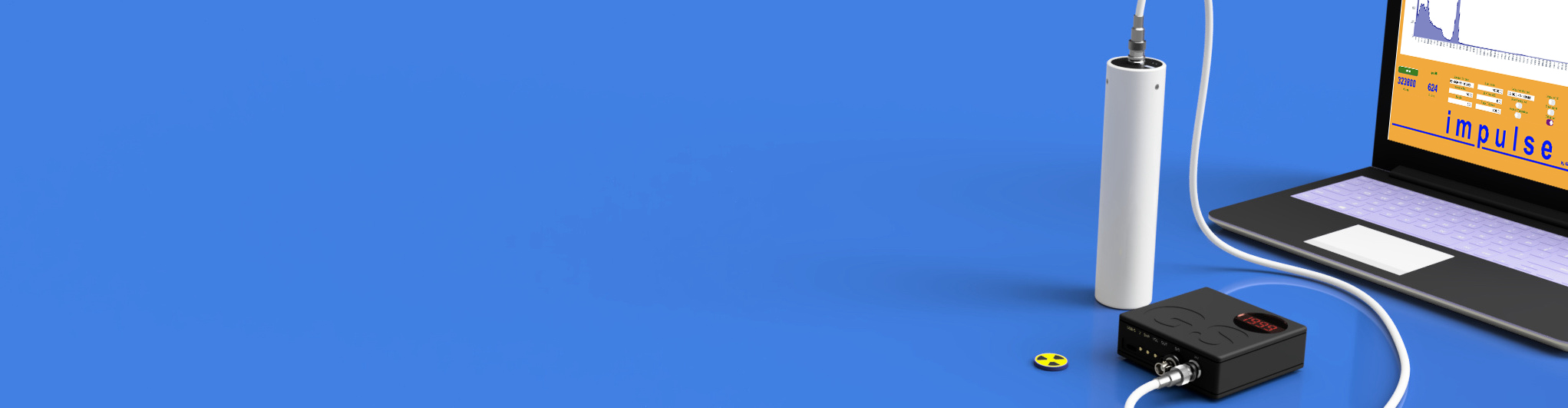
Over the Christmas break I made a few basic intro videos for newcomers to spectrometry and PRA. For most of you this information is pretty trivial but hopefully useful for some.
When making videos there are always parts I wish I would have done or said differently, but in the end it comes down to practice and how much time to spend recording and editing.
Steven
Video 1) Introduction: https://youtu.be/OuZN4CPdQhk
Video 2) Hardware: https://youtu.be/uFZ8zWYdCQU
Video 3: Software: https://youtu.be/_VtMjrrrd64
Video Introduction
-
Sesselmann

- Posts: 1374
- Joined: 27 Apr 2015, 11:40
- Location: Sydney
- Contact:
Video Introduction
Steven Sesselmann | Sydney | Australia | https://gammaspectacular.com | https://beejewel.com.au | https://www.researchgate.net/profile/Steven-Sesselmann
Re: Video Introduction
Hi Steven,
These videos are a great introduction to your products and GS in general.
I would like to suggest producing a video which shows how to setup a new detector with GS-USB-PRO.
More specifically, how to figure out the optimal bias voltage, how to adjust the pulse shape pot and preamp gain. It will be helpful to outline the relation between the HV bias and the preamp gain.
Such video will be a very nice addition to the series, effectively substituting your paper manual for GS-USP-PRO for video one.
Best,
These videos are a great introduction to your products and GS in general.
I would like to suggest producing a video which shows how to setup a new detector with GS-USB-PRO.
More specifically, how to figure out the optimal bias voltage, how to adjust the pulse shape pot and preamp gain. It will be helpful to outline the relation between the HV bias and the preamp gain.
Such video will be a very nice addition to the series, effectively substituting your paper manual for GS-USP-PRO for video one.
Best,
Andrey E. Stoev
Brookfield, Connecticut, USA
Brookfield, Connecticut, USA
-
Rob Tayloe
- Posts: 175
- Joined: 10 Nov 2020, 12:00
- Contact:
Re: Video Introduction
Steven,
Thank you so much for these videos. I started playing with PRA and got results. Then I went back and watched the video #3 again and saw where I can make some improvements.
I was still doing my energy calibration using my polynomial fit in a spreadsheet. I noticed a bit of drift over a couple of days. I was using the GS-USB-PRO and LaBr3 most recently obtained from you (Fall of 2020). As a check of the drift I checked several sources (i.e., Cs137, Co60, and Na22) at the beginning of my measurement series and then again a couple of days later. There was a bit of drift to the left or towards a lower bin (I was using bin number rather than arb. u, one change that I'll make after re-watching the video). For example the 662 keV peak might have started at 567 bin position and then a couple of days later I observed the peak being at 560 pin position. The room temperature generally stayed at 74 degF (~23 C) but could range to a low of 72 F (~22 C) and a high of 76 F (~24 C). I suppose that this small temperature variation could be responsible for the drift.
I will revisit my PRA measurements and post results and invite comments soon. I find that I seem to have much more to learn as time goes by.
Rob Tayloe
Thank you so much for these videos. I started playing with PRA and got results. Then I went back and watched the video #3 again and saw where I can make some improvements.
I was still doing my energy calibration using my polynomial fit in a spreadsheet. I noticed a bit of drift over a couple of days. I was using the GS-USB-PRO and LaBr3 most recently obtained from you (Fall of 2020). As a check of the drift I checked several sources (i.e., Cs137, Co60, and Na22) at the beginning of my measurement series and then again a couple of days later. There was a bit of drift to the left or towards a lower bin (I was using bin number rather than arb. u, one change that I'll make after re-watching the video). For example the 662 keV peak might have started at 567 bin position and then a couple of days later I observed the peak being at 560 pin position. The room temperature generally stayed at 74 degF (~23 C) but could range to a low of 72 F (~22 C) and a high of 76 F (~24 C). I suppose that this small temperature variation could be responsible for the drift.
I will revisit my PRA measurements and post results and invite comments soon. I find that I seem to have much more to learn as time goes by.
Rob Tayloe
-
Sesselmann
- Posts: 1374
- Joined: 27 Apr 2015, 11:40
- Location: Sydney
- Contact:
Re: Video Introduction
Rob,
I'm glad you found the video useful.
Temperature drift is something I think we have to live with.
Turn on the equipment and let it warm up before you make your measurements and then do a quick calibration check before your experiments.
Considering the number of phases we are putting the gamma ray through, it is actually quite remarkable that we are able to achieve a resolution of 6% or 3% in your case. I wish we could somehow get get a more direct energy conversion from the gamma ray...., I'm still thinking about that one.
Steven
I'm glad you found the video useful.
Temperature drift is something I think we have to live with.
Turn on the equipment and let it warm up before you make your measurements and then do a quick calibration check before your experiments.
Considering the number of phases we are putting the gamma ray through, it is actually quite remarkable that we are able to achieve a resolution of 6% or 3% in your case. I wish we could somehow get get a more direct energy conversion from the gamma ray...., I'm still thinking about that one.
Steven
Steven Sesselmann | Sydney | Australia | https://gammaspectacular.com | https://beejewel.com.au | https://www.researchgate.net/profile/Steven-Sesselmann
Who is online
Users browsing this forum: No registered users and 44 guests
