My name is Ed Snible. I’m a software engineer but my hobby is ancient and medieval coins. I’m frustrated at how little metallic analysis is done on ancient coins. I am interested in seeing if I can build my own low-cost XRF setup.
- Ed
Hello from New York
Forum rules
Welcome, these forums are for professional and amateur scientists to discuss matters relating to radiation detection, and to facilitate friendly and honest collaboration. It is a requirement for all members to register using their real names and location. If your name has not already been used, feel free to use it as a login handle, otherwise add your name and location to the bottom of your posts as a default signature. Thanks for cooperating.
BUSINESS REGISTRATIONS
If you have a rad related business and want to post information about your products you may do so in the trading post, providing you first introduce your business formally in the introductions forum and add your business details in the signature sections so it is clear to everyone that your post has a commercial purpose.
Welcome, these forums are for professional and amateur scientists to discuss matters relating to radiation detection, and to facilitate friendly and honest collaboration. It is a requirement for all members to register using their real names and location. If your name has not already been used, feel free to use it as a login handle, otherwise add your name and location to the bottom of your posts as a default signature. Thanks for cooperating.
BUSINESS REGISTRATIONS
If you have a rad related business and want to post information about your products you may do so in the trading post, providing you first introduce your business formally in the introductions forum and add your business details in the signature sections so it is clear to everyone that your post has a commercial purpose.
-
Sesselmann

- Posts: 1383
- Joined: 27 Apr 2015, 11:40
- Location: Sydney
- Contact:
Re: Hello from New York
Hello Ed,
Welcome to the forum...
Building an XRF setup is in theory not so hard, but the problem we come up against is to find a low energy detector with good resolution. Under 50 KeV energy the pulse height from any detector is small and consequently the resolution is poor, which makes it hard to identify the XRF lines. Myself and others have done psudo XRF spectra using Am241 as the source, but barely able to see peaks.
Commercial XRF analysers normally use CZT detectors, which are expensive and frankly not easy to find on the second hand market.
I have been able to source CZT as a raw crystal without electrodes, but the path from a raw crystal to XRF analyser is a long winding road. I am currently passing a town called "sputter coating"..
But don't let my experience dampen your enthusiasm - it's absolutely doable 👍
Keep us posted on your progress.
Steven
Welcome to the forum...
Building an XRF setup is in theory not so hard, but the problem we come up against is to find a low energy detector with good resolution. Under 50 KeV energy the pulse height from any detector is small and consequently the resolution is poor, which makes it hard to identify the XRF lines. Myself and others have done psudo XRF spectra using Am241 as the source, but barely able to see peaks.
Commercial XRF analysers normally use CZT detectors, which are expensive and frankly not easy to find on the second hand market.
I have been able to source CZT as a raw crystal without electrodes, but the path from a raw crystal to XRF analyser is a long winding road. I am currently passing a town called "sputter coating"..
But don't let my experience dampen your enthusiasm - it's absolutely doable 👍
Keep us posted on your progress.
Steven
Steven Sesselmann | Sydney | Australia | https://gammaspectacular.com | https://beejewel.com.au | https://www.researchgate.net/profile/Steven-Sesselmann
Re: Hello from New York
Thanks for the welcome, Steven!
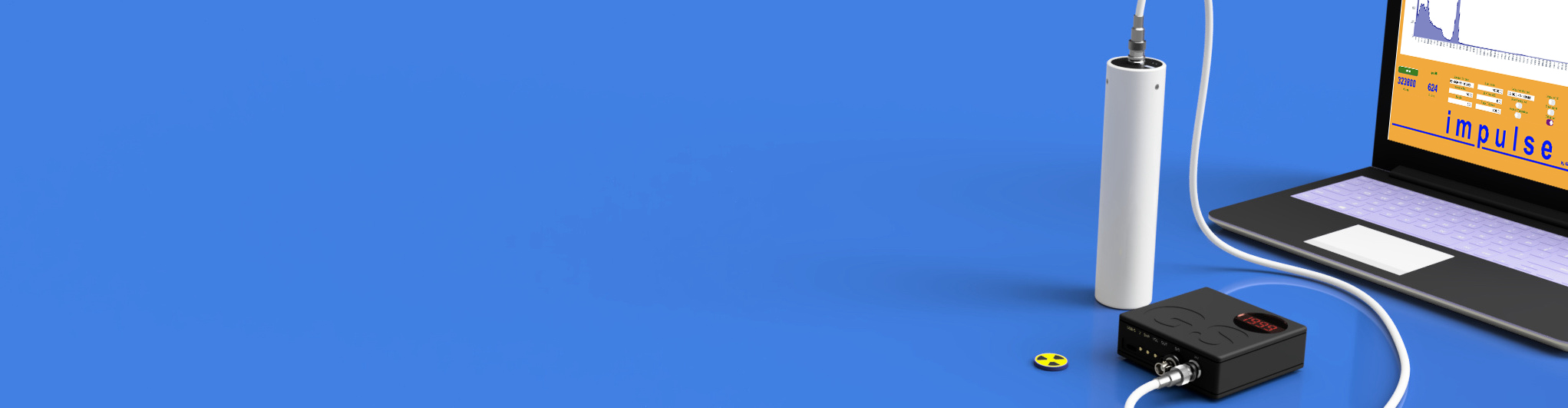
What USB hardware are people using to get the signal into their computers? I found https://www.theremino.com/wp-content/up ... es_ENG.pdf -- but it is seven years old. Or should I use something like GS-PRO-V5 which seems to bypass the need for a separate sound card?
Do you know of software that converts sound card data into a format that can be used by open source analysis software? If not, this is where I will start working.
While I wait for my own hardware, where might I find some poor-resolution sound-card-collected raw signal files to inspect? I'd like to sketch out the computer side. I found the InterSpec software which is free and seems to run on anything. I want to see if I can connect the dots between that and a USB sound card signal.
What USB hardware are people using to get the signal into their computers? I found https://www.theremino.com/wp-content/up ... es_ENG.pdf -- but it is seven years old. Or should I use something like GS-PRO-V5 which seems to bypass the need for a separate sound card?
Do you know of software that converts sound card data into a format that can be used by open source analysis software? If not, this is where I will start working.
While I wait for my own hardware, where might I find some poor-resolution sound-card-collected raw signal files to inspect? I'd like to sketch out the computer side. I found the InterSpec software which is free and seems to run on anything. I want to see if I can connect the dots between that and a USB sound card signal.
-
Sesselmann
- Posts: 1383
- Joined: 27 Apr 2015, 11:40
- Location: Sydney
- Contact:
Re: Hello from New York
Ed,
I am obviously positively biased towards the GS-PRO-V5 (pun intended) , it has a built in texas Instruments sound card.
Unless you have unlimited resources my advise would be to focus on the probe (detector) that's where you can make the biggest gain.
Steven
I am obviously positively biased towards the GS-PRO-V5 (pun intended) , it has a built in texas Instruments sound card.
Unless you have unlimited resources my advise would be to focus on the probe (detector) that's where you can make the biggest gain.
Steven
Steven Sesselmann | Sydney | Australia | https://gammaspectacular.com | https://beejewel.com.au | https://www.researchgate.net/profile/Steven-Sesselmann
Who is online
Users browsing this forum: No registered users and 29 guests
